How to Host a Chestnut Tasting Night: A Beginner's Party Guide
A chestnut tasting is one of the few party formats that costs almost nothing and still feels like an occasion. You need a sharp knife, a hot oven, a pot of water, and a table with enough room for people to stand around pulling shells apart. The chestnuts do the rest of the work.
It also suits a mixed room. Nobody needs to be a confident cook to enjoy it, and nobody needs to be a wine expert to have an opinion. Give eight people three versions of the same nut and you will get an argument within ten minutes. That is the whole point.
Most tasting nights are built around something expensive or rare. Chestnuts are neither, which takes the pressure off. What makes them interesting is how completely the cooking method changes them. Roasted, a chestnut turns sweet, chewy and faintly smoky. Boiled, the same nut becomes soft, mild and almost potato-like. Puréed, it turns silky and rich enough to spread on bread.
Three treatments, one ingredient, three genuinely different experiences. You can explain that in a sentence and let guests discover it themselves. And because peeling is slow, hands-on work, the evening has a natural rhythm: everyone is busy, everyone is talking, nobody is standing awkwardly with a glass.
Keep the selection tight. Three preparations is enough for a full evening; five turns into a buffet.
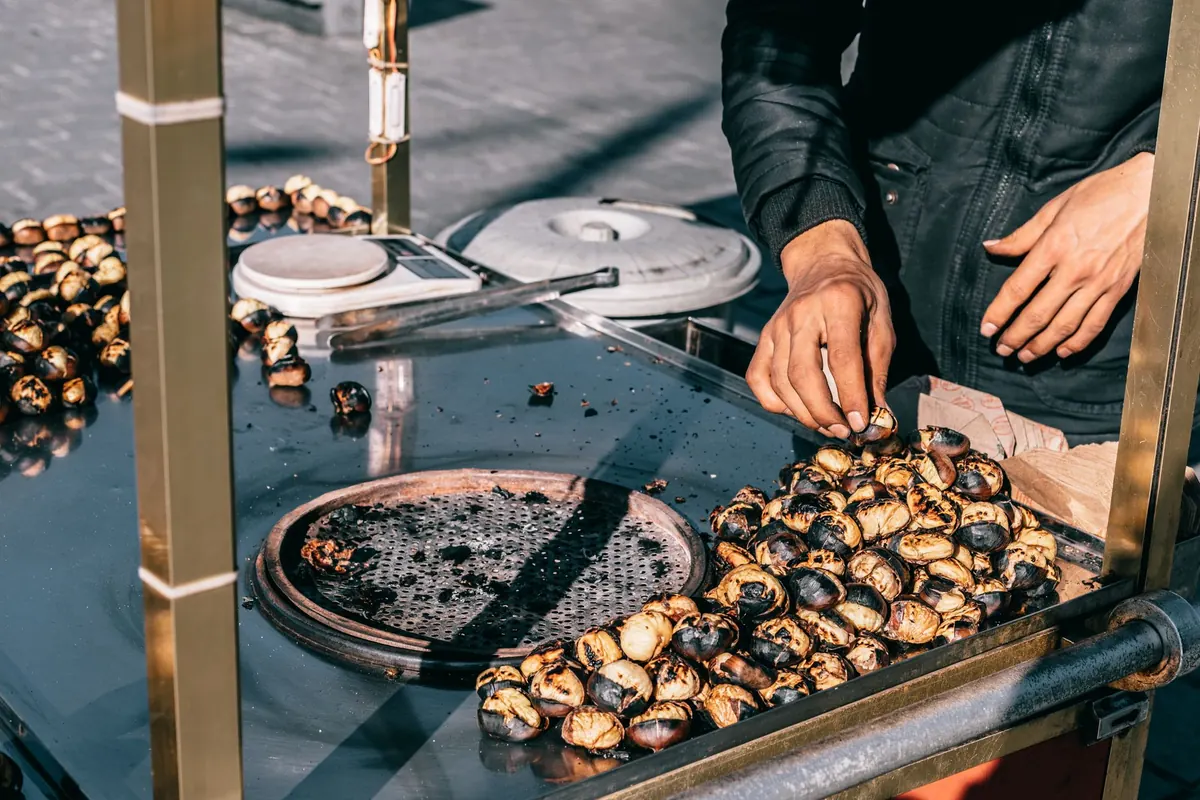
This is the version most people expect, so make it the biggest batch. Score each chestnut through the shell on the flat side with a sharp paring knife, a single deep slit or a small cross. Cut the shell, not deeply into the flesh, or the nut will break apart. A twenty-minute soak in cold water before roasting makes them easier to peel and keeps them from drying out.
Roast at 200°C (400°F) on a tray, cut side up, for 25 to 30 minutes. They are ready when the shells curl back at the cut and the exposed edge looks dry rather than raw. Peel them while they are still hot enough to sting your fingers; as they cool, the inner skin clings and the job gets twice as hard.
Boiled chestnuts are the ones guests will talk about afterwards, usually because they have never had them. Drop scored nuts into salted water with a bay leaf and, if you like, a strip of lemon peel or a few fennel seeds. Simmer for 20 to 25 minutes and test one at the twenty-minute mark; you want tender but not collapsing.
Serve them warm with flaky salt and good olive oil, or with butter and a hard grind of black pepper. This is the preparation that most clearly shows chestnuts as a starch rather than a snack.
Boil a batch until very soft, around 30 minutes, then push the flesh through a sieve or a food mill. Skip the food processor if you can; it turns the mixture gluey. Stir in butter, a splash of whole milk or cream, and salt until it tastes like something you would order in a restaurant.
Serve it warm in small bowls with a spoon, or spread on toasted bread. For a bigger group, thin the purée with vegetable or chicken stock and ladle it out as a small cup of soup. Vacuum-packed cooked chestnuts work perfectly here, so this is the course to cheat on if you are short of time.
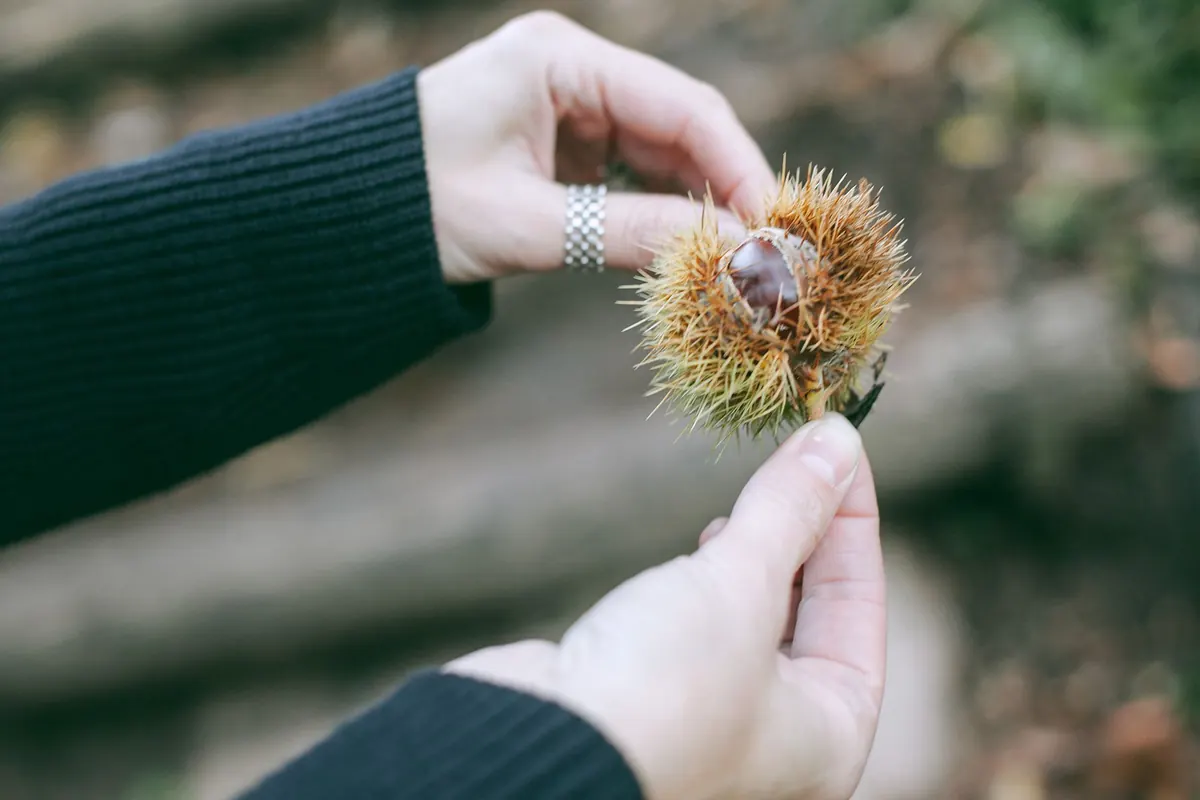
For eight people, plan on roughly ten to twelve chestnuts each across the three preparations, plus a handful of casualties from peeling. That lands around 1.5 to 2 kg of fresh nuts. Buy them a day or two ahead, choose nuts that feel heavy for their size with glossy, unbroken shells, and skip any with small holes or a light, hollow feel. Chestnuts that float in water are usually dried out or hollow; sort those out.
Store them in a paper bag in the fridge and use them within a few days. Here is a workable order for the day itself:
You want three distinct stations rather than one crowded platter, so guests can taste in order and know what they are eating. Small cards or a chalked board help more than you would think.
Resist the urge to add more. The chestnuts are the event; everything else is there to give them context.
Chestnuts are sweet and starchy, so the usual rules apply: acidity and salt cut through them, tannin and heavy oak fight them. A dry sparkling white, a light chilled red with soft tannins, or a dry cider all do the job. Black tea and roasted barley drinks are good non-alcoholic options. Avoid very bitter, heavily hopped beer.
For food, think salty and savoury. Pecorino, tallegio or a wedge of blue, thinly sliced prosciutto or speck, and a peppery cured sausage all flatter the sweetness of the nut. A drizzle of honey with rosemary, or a little orange zest grated over the purée, is the kind of small touch people remember.
Taste from mild to strong: boiled first, roasted second, purée last. The boiled nuts set a baseline, the roasted ones deliver the flavour everyone came for, and the purée finishes rich. Keep the portions small; three or four nuts per person per style is a taste, not a meal, and people will go back for more of their favourite anyway.
Give guests jobs. Someone peels, someone pours, someone keeps the roasted batch moving from tray to bowl. Ask a direct question halfway through: which one would you want a whole bowl of? The answers will be more divided than you expect.
Leftover purée thins into soup with stock, spreads on toast under a fried egg, or folds into mashed potato. Whole roasted chestnuts, chopped roughly, lift a stuffing or sit well in a salad with bitter greens and a sharp dressing. Nothing here needs to be eaten the same night.
Send people home with a small paper bag of the roasted ones if there are any left. It costs you almost nothing, and it guarantees they will remember whose table they were at.
Photo: hbieser / Pixabay
Previous Post
7 Common Mistakes When Foraging and Cooking Wild Chestnuts
Next Post
Chestnut Roasting Traditions Around the World: A Cook's Introduction