Chestnut Foraging Checklist: Gear, Timing, and What to Leave Behind
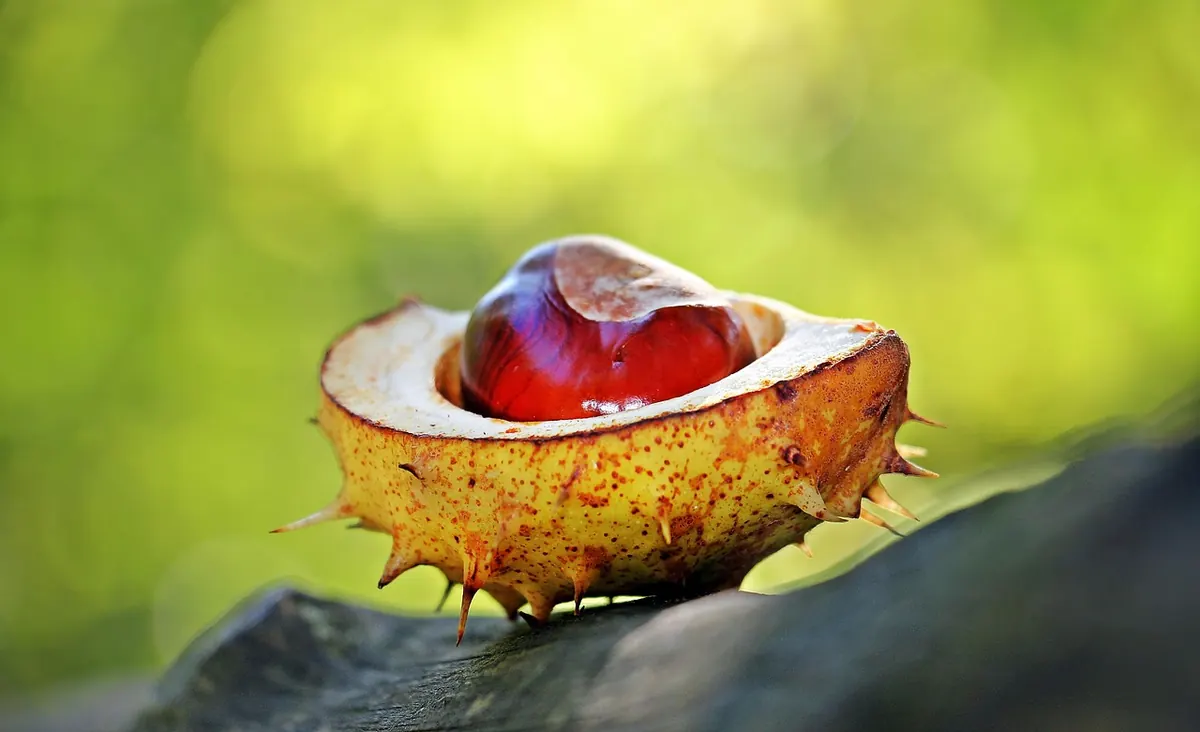
October arrives on the lower slopes and the first burrs split open. You often hear it before you see it — a soft, dry tick as a chestnut drops through the leaves, then the crunch of a spine-covered husk underfoot. Chestnut foraging rewards people who come prepared and quietly punishes the ones who don't. Most of a good trip is decided before you leave the house: what you carry, when you arrive, and what you decide not to pick.
Foraging gear is not about looking the part. It is about not spending the evening with tweezers, a lamp and a bowl of warm water, picking spines out of your fingers. This is the short list worth carrying on a two-hour walk.
Wear long trousers and a bright outer layer. In many Italian regions the autumn chestnut season overlaps with hunting days, so check the local hunting calendar before you set out and make yourself visible rather than rustle-shaped.
Chestnut season generally runs from late September into November, and altitude does most of the deciding. Groves on lower ground ripen first; hillside woods come a couple of weeks later; the high stands can hold on into the cold. The nuts you want are the ones that fell free, glossy and heavy, not the ones still clamped inside a green burr.
A windy night is a gift. Come the next morning and the ground under the trees is fresh with nuts nobody has touched. Burrs also open as the sun warms them, so mid-morning is often better than dawn. After heavy rain on warm ground, chestnuts stain and start to spoil fast — if you can, pick within a day or two of a fall rather than a week later. Weekdays beat Sundays by a wide margin: popular groves near towns are combed over by lunchtime on a sunny weekend.
Give yourself more time than you think. An hour of bending and stepping is tiring, and the walk back is uphill with a basket that weighs more than you expected.
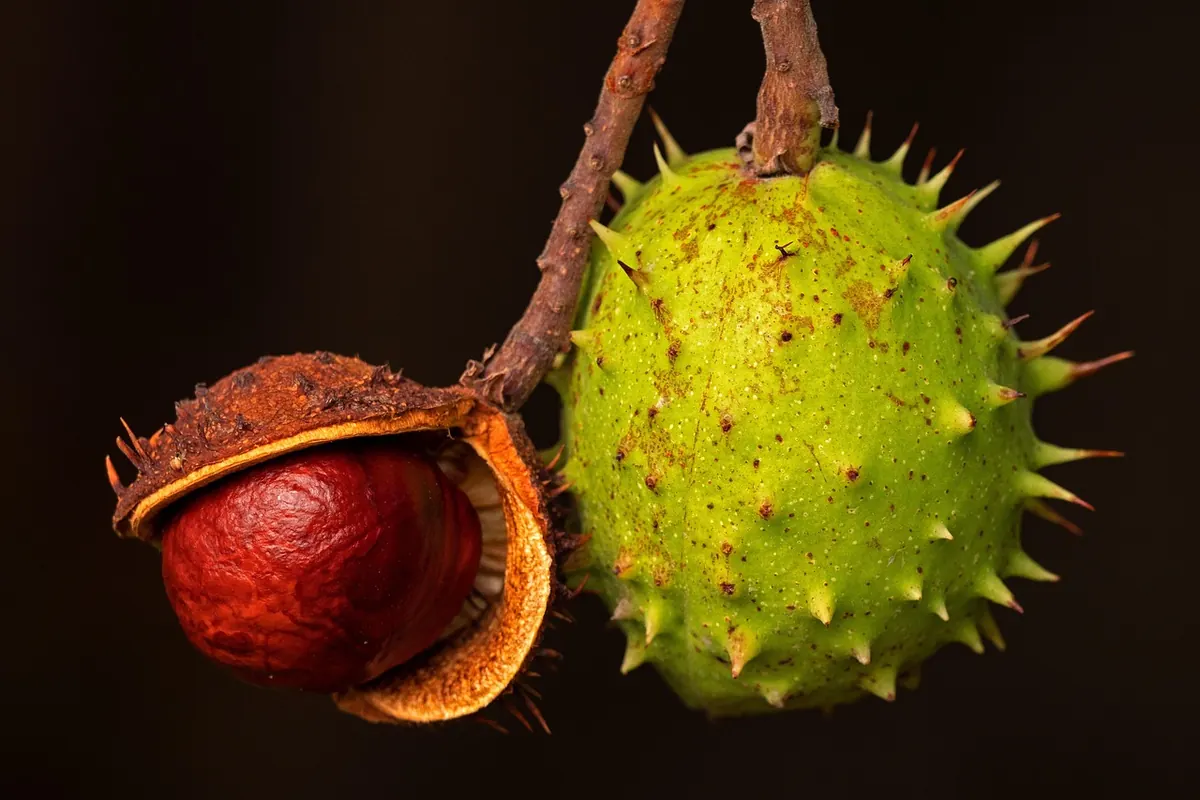
This is the one mistake worth being boring about. Sweet chestnut (Castanea sativa) is what you are after. The horse chestnut, the conker tree, is not edible, tastes bitterly unpleasant and can make you ill. Learn the difference once and you will never confuse them again.
Long, lance-shaped leaves with strongly serrated edges, glossy and simple rather than divided. The nuts are dark brown with a slightly lighter patch, one flat side where it pressed against its neighbour, and a small pointed tuft at the tip. The burr is packed with fine, needle-thin spines and usually holds two or three nuts.
Leaves divided into five to seven leaflets spreading from one stalk, like fingers from a palm. The nuts are rounder, smoother and paler, with a broad circular scar. The husk is thicker, with fewer and broader spines, sometimes knobbly rather than needle-sharp. Keep them out of the basket entirely — one mashed into a tray of roasting chestnuts will ruin the batch.
If you cannot identify the tree with confidence, walk on. There is always another grove.
A float test at home settles any doubts: good chestnuts sink in a bowl of water, and the ones that bob to the surface go out. Do it the same day, before the bad ones affect their neighbours.
Rules change from region to region, from park to commune, and from one privately owned chestnut grove to another. In many public woods in Italy, gathering chestnuts for your own table is tolerated or expressly allowed, sometimes with a quantity limit; in others, and inside parks and reserves, you need permission or a permit, and any commercial picking certainly does. Ask before you fill the car: the local comune office, the park authority or the Carabinieri Forestale can tell you what applies where you intend to go.
Then use your eyes. A fence, a closed gate, a "proprietà privata" sign or a freshly raked grove all mean the same thing, and it is not an invitation. Park on the road, not on farm tracks, and leave gates as you found them. For anything involving rules, permits or land access, check with the local authority rather than relying on what someone told you at the market.
The measure of a good forager is what stays in the wood. Leave these where they are:
Take roughly what you will actually eat over the next few weeks and leave the rest. A basket you can finish before it spoils is worth more than a sack that ends up in the bin.
Tip the chestnuts into a single layer in a shallow crate or cardboard box and keep them somewhere dry and airy — not in a sealed tub, not in the fridge drawer where they will go damp. Sort out the floaters within a day, and check again after three or four days for the ones that have started to soften or show a weevil hole. Slit the shells before roasting so they do not burst, and freeze what you cannot eat in time, shelled or roasted.
Clean the gloves, check the stick is still in the car, and note where you parked. Then judge the day by what you left under the trees, not by the weight of the basket.
Photo: pixel2013 / Pixabay
Previous Post
What to Cook With Fresh Chestnuts in October and November
Next Post
Sweet Chestnut vs. Horse Chestnut: A Cook's Identification Guide